
Buying guide
GARAGE FLOOR TILES VS EPOXY
Two very different ways to finish a garage floor. Here is what each one costs you in time, prep and repairs, and when each is the right call.
Are garage floor tiles better than epoxy?
For most home garages, yes. Interlocking tiles lay over the existing slab in an afternoon with no grinding or curing, cannot peel or suffer hot-tyre pickup, and a damaged tile is swapped on its own. Epoxy wins when you need a seamless, fully sealed surface. Detail Garage tiles cost R76 each, about R475 per square metre.
05 — The honest comparison
TILES VS. EPOXY
Epoxy looks great on day one. Here's what the next ten years look like.
Are garage floor tiles better than epoxy?
| Factor | Detail Garage Tiles | Epoxy Coating |
|---|---|---|
| Install time | One afternoon, DIY | 3–5 days + curing |
| Surface prep | None — covers cracks | Grinding & repairs required |
| Hot tire pickup | Impossible | Common failure point |
| Repairs | Swap a single tile | Re-coat the section |
| Take it when you move | Yes — unclip & go | Stays with the house |
The real difference: prep and curing
Epoxy is a coating, so it is only as good as the bond to the concrete underneath. That is why a proper epoxy job starts withgrinding the slab, repairing cracks and letting the floor dry, then several coats with curing time between them. The garage is out of action for days, and most of the cost of an epoxy quote sits in that preparation.
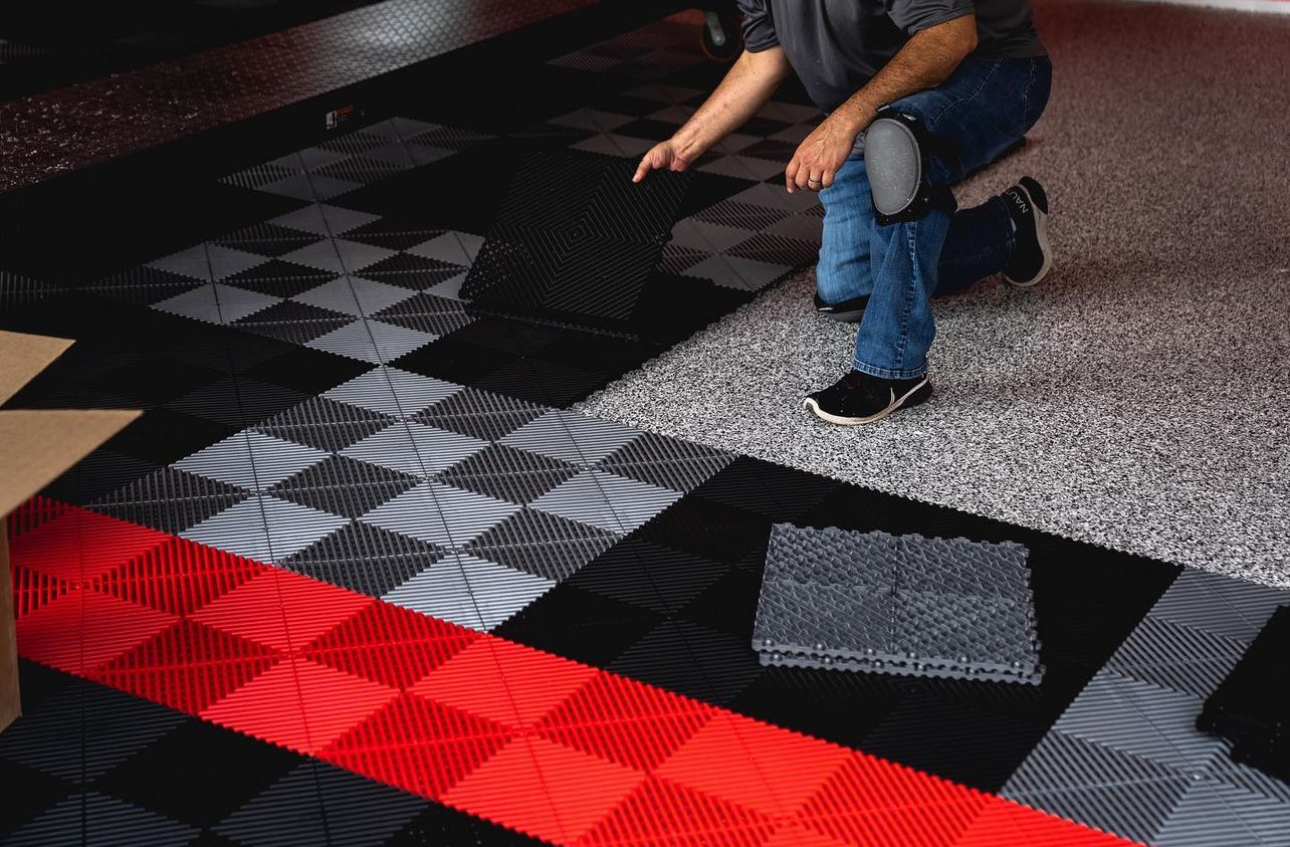
Interlocking tiles skip all of it. They are not bonded to anything: they lay straight over the slab you have, cracks and old stains included, and you can drive on the floor as soon as the last tile clicks in. See the step-by-step install guide.
Cost: what you actually pay for
Epoxy is usually quoted per square metre by an installer, and the price swings with how much grinding and repair your slab needs. Cheap DIY epoxy kits cost less up front, but skipping the prep is the main reason coatings peel.
Tiles are priced per tile, and the slab doesn't change the price. Detail Garage tiles are R76 each, which isabout R475 per square metre, and there is no installer to pay. See thefull price guide with garage sizes.
Durability and repairs
| Problem | Interlocking tiles | Epoxy |
|---|---|---|
| Hot tyre pickup | Can't happen, nothing is bonded | A common failure point |
| Cracked slab | Tiles bridge over it | Cracks must be repaired first, and can come back through |
| Damage | Unclip and replace one tile | Grind and recoat the area |
| Moving house | Lift the floor and take it with you | Stays behind |
| Changing the look | Swap colours or add a border later | Recoat |
When epoxy is the better choice
We sell tiles, but they aren't right for every floor:
- You need spills contained above the slab. Ventilated tiles let liquids drain through to the concrete. A seamless coating keeps them on the surface.
- You want one continuous, glossy surface with no joints at all.
- The floor carries constant heavy point loads that are never moved, where a bonded surface makes more sense.
For a home garage, a detailing bay or a hobby workshop, tiles are usually the easier, more forgiving choice, and they look the part from day one. See custom floor designs for what you can do with 14 colours.
Ready to compare properly? Price your floor on thegarage floor tiles page, or send us your measurements onWhatsApp for an exact tile count.
Tiles or epoxy
QUESTIONS
Are garage floor tiles better than epoxy?
For most home garages, yes. Interlocking tiles go down in an afternoon with no surface prep or curing, cannot peel or lift from hot tyres, and a damaged tile is swapped on its own. Epoxy is the better choice when you need a fully sealed, seamless surface, for example where fluids must not reach the concrete.
Are garage tiles worth it?
If your slab is cracked, stained or uneven, or you want to use the garage the same day, tiles are usually worth it because they skip the grinding, patching and curing that make epoxy expensive. Detail Garage tiles cost R76 each, about R475 per square metre.
Do garage tiles get hot tyre pickup like epoxy?
No. Hot tyre pickup happens when a warm tyre softens and lifts a bonded coating. Interlocking tiles are not bonded to the slab, so there is nothing to lift.
What happens to spills on garage floor tiles?
The ribbed, ventilated surface lets water and spills drain through to the concrete, so the top stays dry and grippy. Wipe up oil promptly, and lift a few tiles now and then to rinse the slab underneath. If you need spills fully contained above the slab, epoxy is the better fit.